Barndominium Builders in Garrard County, KY
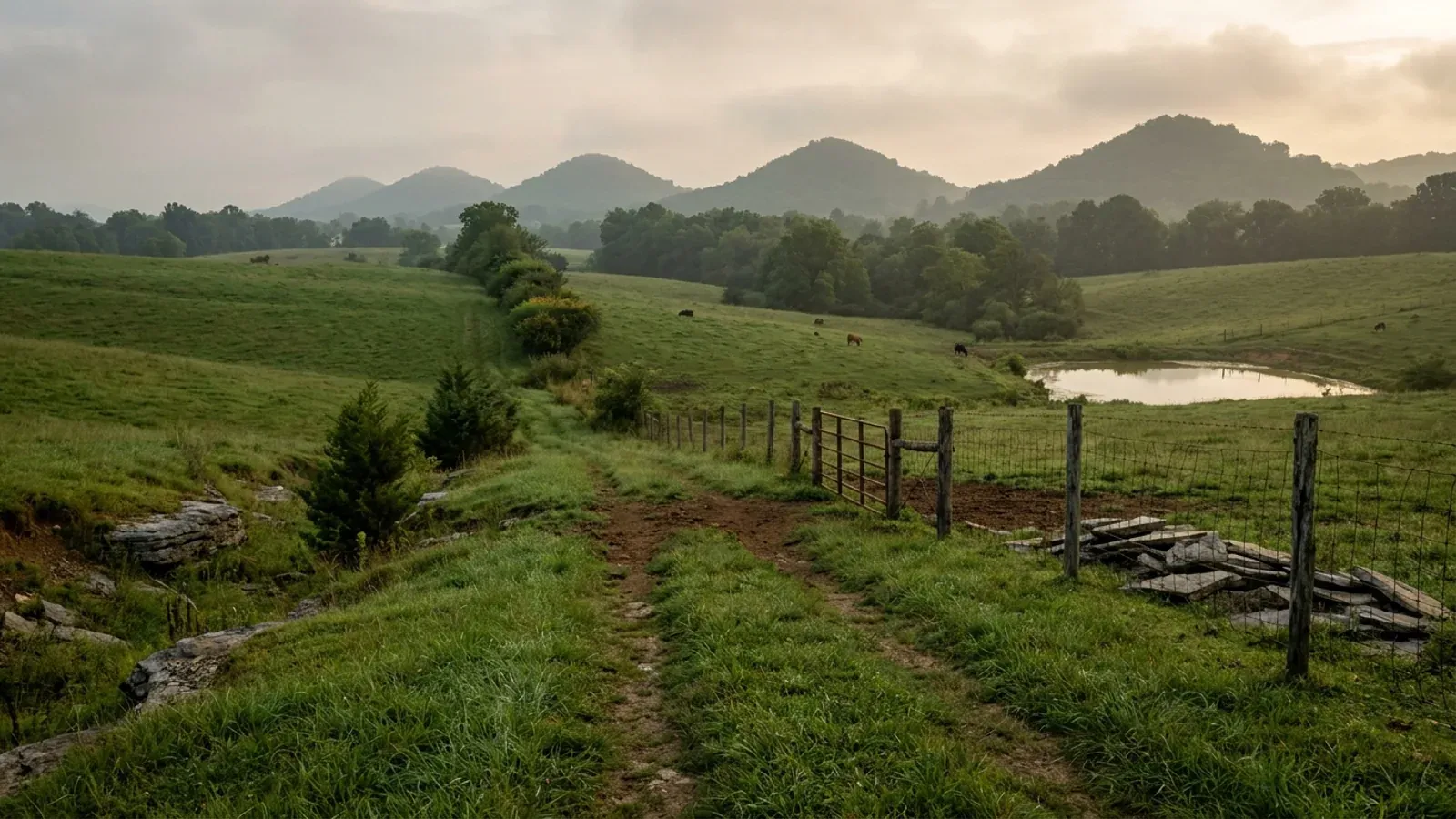
Garrard County is the combination most buyers assume does not exist in Kentucky: a county that inspects your house from the footing up and has no zoning ordinance at all. Its Fiscal Court adopted a building-code ordinance under KRS 198B.060(8), runs a Level 1 program with the state Department of Housing, Buildings and Construction, and employs one building inspector whose jurisdiction covers the whole county including the city of Lancaster - so there is no line to cross here and no unregulated remainder, which is the opposite of the Kentucky default where a single-family house on rural land needs no permit unless the local government passed an ordinance requiring one. What Garrard never adopted is planning and zoning under KRS Chapter 100. The county's own department list runs Road, Animal Control, EMS, Solid Waste, Emergency Management, Bluegrass 911 and Code Enforcement, and stops there; the only zone-change and plat-review fees on the county's published fee schedule sit in a column headed Lancaster Only. So there is no agricultural district, no dimensional table, no setback schedule and, critically for this building type, no cap of any kind on how large a detached shop may be against the house. What the building-code ordinance does carry instead is a short list of rules that behave like zoning: a dwelling may not go on a lot smaller than one acre, it must have at least 150 feet of road frontage, and any parcel in Garrard County may contain only one dwelling. The body that grants an exception to any of that is the Fiscal Court itself, at a public meeting, rather than a board of adjustment. The land under all this is Outer Bluegrass limestone with the Kentucky River Palisades - a limestone gorge cut into Middle Ordovician High Bridge and Lexington rock - forming the entire northern boundary, the Dix River and Herrington Lake closing the west, and the Knobs rising at the south-eastern corner. USDA counts 647 farms here across 108,923 acres, which is about three-quarters of the county's total land area, and 255 of those farms fall in the 50-to-179-acre band that suits this building type best. At roughly 74 people per square mile Garrard carries about a third of Madison County's density and a quarter of Jessamine's, and that ratio, rather than any raw acreage total, is what actually makes it the land answer its neighbours point at.
Garrard County at a glance
- County
- Garrard
- Population
- 16,953
- ZIP codes
- 40444, 40461, 40410
- Site visits
- Site visits across Lancaster, Paint Lick, Bryantsville, Buckeye and the Herrington Lake shore
Building conditions in Garrard County
The building code is the same in every Kentucky county, and no local government may adopt or enforce a different one on a house — the Kentucky Residential Code says so in its own text. The design criteria are settled by the state too: the code prints a filled-in table covering all 120 counties, so your county's ground snow load, frost depth and seismic design category are published figures rather than something a local office decides. Ultimate design wind speed is 115 mph for every county in the state.
What changes from one county to the next is whether anyone checks. Kentucky makes permits, inspections and certificates of occupancy optional for a single-family home unless the local government has passed an ordinance requiring them, and it forbids the state from stepping in where none has. Twenty-five counties tell the state outright that they have no local building inspector, and in much of the rest the answer depends on an ordinance the county either passed or never did. Zoning is a separate, equally local choice — most Kentucky counties have never adopted any. What is below covers this county specifically: who issues the permit if anyone does, what the state's tables assign it, and what the ground does to a slab.
https://garrardcountyky.gov/wp-content/uploads/2025/03/Building-Code-Amendment-March-2025.pdf - Garrard County Ordinance No. 0-4-9-18-1, amended 30 Sep 2024 and 10 Mar 2025, Sections 1 to 3; PDF text extracted and read 6 Sep 2026 · https://garrardcountyky.gov/county-department/code-enforcement/building-code-enforcement/ (Level 1 program, four inspections, application requirements; read 6 Sep 2026) · https://garrardcountyky.gov/wp-content/uploads/2023/03/Inspection-Schedule.pdf · https://garrardcountyky.gov/wp-content/uploads/2023/03/Final-Inspection-Notice.pdf · https://garrardcountyky.gov/ordinances/ (published ordinance index, no zoning ordinance) · https://garrardcountyky.gov/county-department/ (department list, no planning commission) · https://apps.legislature.ky.gov/law/statutes/statute.aspx?id=52659
https://garrardcountyky.gov/wp-content/uploads/2025/03/Building-Code-Amendment-March-2025.pdf - Section 3, building inspection program scope; extracted 6 Sep 2026 · https://garrardcountyky.gov/wp-content/uploads/2023/03/Fee-Schedule.pdf - Garrard County Building Permit Fees, effective 2017; accessory-building tiers read from both raw and layout PDF extractions and reconciled row by row · https://apps.legislature.ky.gov/law/statutes/statute.aspx?id=52659 (KRS 198B.060(8) and (11))
https://garrardcountyky.gov/wp-content/uploads/2025/03/Building-Code-Amendment-March-2025.pdf - Section 3 and Section 3(l), Ordinance No. 0-4-9-18-1 as amended 10 Mar 2025; extracted 6 Sep 2026 · https://garrardcountyky.gov/wp-content/uploads/2023/03/Building-code-ordinance-2021.pdf - the superseded 2021 text, whose Section 3(l) required the building official to refuse a permit violating recorded restrictions; both files extracted and compared 6 Sep 2026, and the 2025 amendment is the one relied on here · https://garrardcountyky.gov/county-department/code-enforcement/building-code-enforcement/ (application checklist) · https://garrardcountyky.gov/agenda/
https://dhbc.ky.gov/Documents/2018%20Kentucky%20Residential%20Code%203d%20Ed.pdf - Table R301.2(1) for snow, wind, weathering and termite; Table R301.2.2.1 Seismic Design Categories-Site Class D; Table R403.1.4 Minimum Frost Protection Depth for Kentucky and its backfill and solid-rock provisions. Transcribed in research/statewide/design-criteria-and-climate.md and not re-fetched · https://garrardcountyky.gov/wp-content/uploads/2025/03/Building-Code-Amendment-March-2025.pdf (Sections 1 and 11, code adoption by regulation reference) · https://garrardcountyky.gov/wp-content/uploads/2023/03/Codes-Currently-Enforced.pdf (published as a scan with no text layer, so its contents were not read)
https://www.nass.usda.gov/Publications/AgCensus/2022/Online_Resources/County_Profiles/Kentucky/cp21079.pdf - 2022 Census of Agriculture, Garrard County profile. PDF extracted twice, with pdftotext -raw and pdftotext -layout, and every figure reconciled between the two passes; the layout pass misaligns the Farms by Size columns and the raw pass was relied on · https://www2.census.gov/geo/docs/maps-data/data/gazetteer/2024_Gazetteer/2024_Gaz_counties_national.zip (2024 Census Gazetteer: Garrard County GEOID 21079, ALAND_SQMI 229.925, internal point 37.630162 / -84.545856; file retrieved and the row read directly 6 Sep 2026) · research/statewide/geography-and-population.md (neighbouring county densities)
https://www.uky.edu/KGS/esaapg07/ft_palisades.html (KGS: Pleistocene incision of the Kentucky River created the limestone cliffs locally known as the Palisades; High Bridge and Lexington Group limestones) · https://www.uky.edu/KGS/water/library/gwatlas/wprkarst.html (KGS karst areas, the cities named in each, and the 92-of-120 count; no county roster is published) · https://kgs.uky.edu/kygeode/geomap?gkarst=true (KGS Karst Potential Index, parcel-checkable) · https://garrardcountyky.gov/about-garrard-county/ (Herrington Lake and the Palisades named by the county) · https://www.epa.gov/sites/default/files/2014-08/documents/kentucky.pdf and https://radonlevels.org/state/ky (EPA radon zones; Garrard is absent from the 30-county Zone 1 list) · https://insurance.ky.gov/PPC/Documents/JAN%202025_Revised%20Mine%20Subsidence%20Insurance%20Fund%20080124.pdf (the 37 participating counties; Garrard is not among them)
Also worth knowing before you build in Garrard County
- Garrard County is in the NFIP but not in the Community Rating System, and the county next door is
- FEMA's Kentucky Community Status Book lists unincorporated Garrard County as community 210081B, participating in the National Flood Insurance Program, with an initial FIRM date of 1 September 1989 and a current effective map dated 21 December 2017 - the same countywide map date as its eastern neighbour. The City of Lancaster is community 210082, also participating, and is marked NSFHA: no special flood hazard areas mapped inside the city limits at all. Neither community appears on FEMA's Community Rating System eligible list effective 1 April 2026. That list carries 42 Kentucky communities, of which 33 hold a class better than 10 and therefore earn an actual premium discount, and three of those 33 sit immediately across the Kentucky River and the Madison County line. So the flood-insurance arithmetic runs the opposite way to the land arithmetic: a floodplain parcel in Garrard County carries no CRS discount, where the same parcel a few miles east would carry five or ten percent. That is a real number to put in a budget rather than a technicality. Floodplain administration for the county runs through Garrard County Code Enforcement at 15 Public Square, 859-792-3531, whose floodplain page directs owners who believe their mapping is wrong to a Letter of Map Amendment supported by a surveyor's Elevation Certificate establishing base flood elevation, and directs anyone disturbing a stream - removing or dredging gravel and rock, re-routing, or other physical disturbance - to the state Water Quality Certification permit. On top of any local approval, Kentucky requires a separate state Division of Water floodplain permit for construction in the base floodplain under KRS 151.250 and 401 KAR 4:060 Section 2, applied for on form DOW 7116; the state permit stacks on the local one rather than replacing it, and along the Kentucky River, the Dix River and the Herrington Lake shore is where it most often applies.
- The septic permit comes from a single-county health department, and its report is what unlocks the building permit
- Kentucky mixes multi-county district health departments with standalone single-county ones, and Garrard is standalone: the Garrard County Health Department at 89 Farra Drive in Lancaster, 859-792-2153, serves this county alone. Its published sequence puts the soil work first and makes it a condition of the building permit rather than a parallel task. Before buying property, contact the health department to arrange a soil evaluation and complete an application; a backhoe is required for the evaluation, and the fee is $200. Once the evaluation is complete and a suitable area determined, the environmentalist provides a report of the results and the system options - and that report must be submitted to the building inspector in order to obtain a building permit. The sewage permit itself is a further $250. The department also states that the septic permit must be obtained before the plumbing permit is issued. The county's own permit checklist agrees from the other side: the first item it asks for with a new-home application is the septic system soil evaluation report for approval. Two other rules interlock with this. The building-code ordinance's one-dwelling-per-parcel rule is written as being in accordance with Health Department guidelines, so the septic capacity of the lot is part of that answer. And DHBC's Garrard County sheet prints environmentalist office hours of Wednesday 8:00 to 9:30 a.m., where the department's own site gives fuller hours of Monday to Thursday 8:00 a.m. to 4:30 p.m., Friday until noon and Tuesday until 6:00 p.m. - so call the department's own number rather than working from the directory.
- The building permit is a flat fee by square footage, and a 6,000 sq ft shop costs the same as a 1,000 sq ft one
- Garrard County prices residential building permits as flat fees against finished size rather than as a percentage of construction cost, which is unusual in Kentucky and generally favourable on a large building. The published schedule runs $200 for 1,999 square feet and less, $250 from 2,000 to 3,000, $300 from 3,001 to 4,000, and $350 at 4,001 square feet and greater - and $350 is the top of the table, so there is no tier above it. Room additions are $100, decks and porches $50, an in-ground pool $50, and a mobile home permit $150. Accessory buildings are $25 under 144 square feet, $50 from 144 to 750, and $100 above 750 with no upper limit. Commercial work is priced by the square foot instead, at 13 to 16 cents depending on occupancy, with production greenhouses at 10 cents. The right-hand column of the same sheet is headed Lancaster Only and prices signs, business awnings, demolition, carports, cell tower applications, residential zone changes at $150 per hearing, and preliminary and final plat review at $150 and $300 - which is the plainest published evidence that zone changes and platting are a city matter here and not a county one. The sheet is marked effective 2017 and the fees for permits and inspections are set by order of the Fiscal Court under Section 8 of the ordinance, so confirm current amounts with the office at 859-792-3531 before budgeting. Electrical inspection fees are set separately by the state electrical inspector under the ordinance as amended in 2025.
- You may live in an RV on the site for up to 365 days - but the county wrote conditions on it that its neighbours did not
- Garrard County's Fiscal Court adopted a standalone ordinance on 10 October 2022 making it unlawful to use a recreational vehicle as a permanent, temporary, casual or occasional residence anywhere in the county, and then wrote three exceptions. The one owner-builders need is Exception 3: it is permitted to temporarily occupy a recreational vehicle for up to 365 days while the occupant constructs a new dwelling, provided placement does not conflict with any covenants or restrictions on the lot or neighbourhood. The conditions attached are unusually specific. The occupant must produce a deed vesting title in himself and a construction contract for a single-family residence including blueprints before the building permit issues, and may be required by the building inspector to produce documents evidencing sufficient means to complete the build described. Construction must commence within 90 days of occupying the lot with the vehicle and show substantial progress; if in the inspector's opinion it has not, the building permit may be revoked and withheld. Building a residence for a third party under this exception is prohibited, so it is an owner-builder allowance rather than a contractor's convenience. Section 4 separately makes it unlawful to place a recreational vehicle on any lot under ten acres for any purpose except as permitted by the exceptions, and bars parking, connecting to utilities or storing an RV on a residential lot with no permanent dwelling present. Flammable underpinning - cardboard, straw or hay bales, bags of leaves, wood products - is prohibited outright. Enforcement sits with the building inspector, who may refuse or revoke the permit or certificate of occupancy, order the sheriff to remove or impound the vehicle, charge up to $100 per inspection, fine up to $250 per day for continuing violations, and file a lien against the property. This is a written permission with a clock and a paperwork test on it, and it is worth reading before the RV is towed onto the lot rather than after.
- If your roof is trusses, the county puts a reflective sticker on your meter - and that ordinance names accessory structures too
- Garrard County adopted an ordinance requiring a reflective symbol on structures using engineered lumber, written for firefighter safety on the basis that some engineered lumber burns faster than sawn lumber. It defines engineered lumber as fabricated I-joists, truss joists, truss rafters and laminated beams or studs, and defines structure as primary, secondary and accessory structures as defined in the county building code. Every structure built with engineered lumber after the ordinance took effect must have a reflective symbol affixed and visible from the exterior, on each electrical meter serving the structure. The symbols are issued by the Office of Garrard County Building Code Enforcement and read F for a fabricated floor system, R for a fabricated roof truss system, and FR for both. Removing the symbol or refusing to place it carries a $25 fine per offence, each day a separate offence, enforced by the building inspection office. For this building type the ordinance is close to universal in effect: a post-frame or steel-framed barndominium with a fabricated roof truss system earns an R at minimum, and a two-storey one with engineered floor joists earns an FR. It also reaches a detached shop, because accessory structures are named in the definition. It is a small administrative step and it happens through the same office that issues the permit, but it is a Garrard County ordinance and it has no counterpart in the neighbouring counties, so a builder who has only worked next door will not be expecting it.
- Two versions of the same ordinance are online, several key documents are scans, and the driveway culvert is on you
- Three practical notes about working with Garrard County's published record. First, the county has two copies of its building-code ordinance online and they differ materially: the Building Code Enforcement page links a 2021 file, while the ordinance index links Ordinance No. 0-4-9-18-1 amended 30 September 2024 and 10 March 2025. The 2025 amendment is the current one, and it is the version that adds the one-acre dwelling minimum, the 150-foot frontage requirement and the one-dwelling-per-parcel rule, and that reverses the earlier position on private deed restrictions. Ask the office which text it is applying, and read the 2025 file. Second, several of the documents a builder most wants are published as scanned images with no text layer - the 2025 building permit application, the Subdivision Regulations, the combined sewage, plumbing and building guidelines, the list of codes currently enforced, the farmstead exemption affidavit, the tiny home affidavit and the 2025 sanitation and wastewater ordinance are all in that category - so those have to be collected on paper or by email from 15 Public Square rather than read online. Third, an ordinance most buyers never think about until the concrete truck is due: the county's drainage ordinance adopts Kentucky Transportation Cabinet specifications for drainage as the minimum standard, and makes the property owner responsible for the cost of culvert construction whenever a new driveway or entrance is built onto a county road, with the County Road Supervisor authorised to issue a written stop-work order to a non-compliant owner and complete the work at the owner's expense. On a farm tract with no existing entrance, that culvert is a real line item and it is settled with the Road Department, not the building office.
- A tiny home or a pre-manufactured building dropped on the site is treated as a mobile home here
- Section 4A of the building-code ordinance closes a route that owner-builders in unzoned counties often ask about. It applies to any manufactured building designed for conveyance after fabrication on streets and highways, on its own wheels or on a flatbed or trailer, arriving on site for use or occupancy - and it states that a permit will not be issued for that type of occupancy unless a list of criteria is met, with permanent electric and sewage withheld until they are. For all practical purposes, and in regard to any deed restrictions, a tiny home or pre-manufactured building used as a dwelling is considered a mobile home in Garrard County. The criteria are the ones a site-built house would meet anyway: an individual address; a water closet, lavatory and bathtub or shower plus a kitchen sink, all connected to sanitary sewer or an approved private system; a treated sill plate anchored to a permanent foundation with footer and solid pier as described in the Kentucky Residential Code, or an engineer's or architect's letter certifying an equivalent, or installation by a licensed installer in the manner of a manufactured home; smoke detectors; hurricane straps or clips; lumber and construction methods complying with the residential code for loading; documented termite treatment; and full-perimeter underpinning or skirting in masonry, treated wood or plastic within 60 days. Where a genuine manufactured or mobile home is placed instead, Section 4 requires a placement and habitation permit from the Judge/Executive's office before it arrives, a one-acre minimum lot with 150 feet of road frontage, septic or sewer approval and an electrical permit in hand first, installation by an installer certified under KRS 227.560, and a certificate of occupancy before anyone moves in. Storage of an unoccupied mobile home in the county is prohibited except by licensed dealers.
- Herrington Lake has its own permit, and it comes from the Judge/Executive rather than the building office
- Garrard County's western boundary is Herrington Lake, impounded on the Dix River, and the building-code ordinance carries a full section written for it. Section 5 requires a Water Structure Permit from the Garrard County Judge/Executive's office for the installation or repair of docks, mooring platforms, swim platforms and similar structures, with the owner supplying information on the materials used, plans approved by a licensed architect or structural engineer where the building official requires them, and an inspection of the structure and its materials before it is completed and put into use. The material standards are specific: floats must be fabricated of materials manufactured for marine use, encapsulated and warranted by the manufacturer for at least five years against sinking, waterlogging, cracking, peeling, fragmenting or losing beads; they must resist puncture and penetration, resist damage by animals and be fire resistant; new or recycled plastic or metal drums and non-compartmentalised air containers are prohibited as encasement or floats; and floats meeting the Army Corps of Engineers standard ERDC/EL TR-09-5 are deemed compliant. Serviceability is defined as the float's ability to keep the lowest part of the dock at least five inches of freeboard above the water surface. Decks, stairs and walkways built on dry land to reach a dock must meet the Kentucky residential or building code as applicable, so the land side of a lake access runs back through the ordinary permit. During construction or repair the owner is responsible for containing all foam and debris from polluting the water. A lakeside parcel therefore carries two county approvals rather than one, from two different offices in the same building.
https://www.fema.gov/cis/KY.html (Kentucky Community Status Book: Garrard County CID 210081B, initial FIRM 1 Sep 1989, current effective map 21 Dec 2017; Lancaster CID 210082, NSFHA. This host refuses curl and was read through the fetch tool instead) · https://www.fema.gov/sites/default/files/documents/fema_crs_eligible-communities_042026.pdf (CRS Eligible Communities effective 1 April 2026; the Kentucky block was extracted with pdftotext -raw and all 42 rows read and counted directly - 33 hold a class better than 10 - and neither Garrard County nor Lancaster appears. Layout-mode extraction of this file misaligns the class column by one row and was not used) · https://garrardcountyky.gov/county-department/code-enforcement/floodplain-enforcement/ · https://apps.legislature.ky.gov/law/statutes/statute.aspx?id=54097 · https://apps.legislature.ky.gov/law/kar/titles/401/004/060/
https://www.gchealthdept.org/environmental/ (Garrard County Health Department, on-site sewage: soil evaluation application and $200 fee, backhoe requirement, report submitted to the building inspector to obtain a building permit, $250 sewage permit, septic before plumbing permit, address and hours; read 6 Sep 2026) · https://garrardcountyky.gov/county-department/code-enforcement/building-code-enforcement/ (permit checklist, septic soil evaluation report first) · https://dhbc.ky.gov/Documents/Garrard%20County.pdf (health department address, environmentalist Heith Stone, sheet updated 12 Jun 2026) · https://garrardcountyky.gov/wp-content/uploads/2024/03/Guidelines-for-Sewage-Plumbing-and-Building-Permits.pdf (the county's own combined guidance sheet is published as a scan with no text layer and was not read) · https://apps.legislature.ky.gov/law/kar/titles/902/010/085/
https://garrardcountyky.gov/wp-content/uploads/2023/03/Fee-Schedule.pdf - Garrard County Building Permit Fees, effective 2017; extracted with pdftotext in both raw and layout modes and reconciled line by line, since the sheet is a two-column table of the kind layout mode misreads · https://garrardcountyky.gov/wp-content/uploads/2025/03/Building-Code-Amendment-March-2025.pdf (Section 1b(i) electrical fees set by the state electrical inspector; Section 8 fees set by order of the Fiscal Court)
https://garrardcountyky.gov/wp-content/uploads/2023/04/Camper-Ordinance-Adopted-10-10-22.pdf - Ordinance Prohibiting Use of Recreational Vehicles as Dwellings, adopted by the Garrard County Fiscal Court October 2022, Sections 1 to 6 including Exception 3 and the Section 5 penalties; PDF text extracted and read in full 6 Sep 2026 · https://garrardcountyky.gov/ordinances/
https://garrardcountyky.gov/wp-content/uploads/2023/03/Engineered-Lumber-Labeling-Ordinance.pdf - An Ordinance Requiring a Reflective Symbol on Structures Using Engineered Lumber to Assist Fire Response Personnel and Their Personal Safety, Garrard County Fiscal Court; PDF text extracted and read 6 Sep 2026 · https://garrardcountyky.gov/ordinances/
https://garrardcountyky.gov/wp-content/uploads/2025/03/Building-Code-Amendment-March-2025.pdf (current text, amended 10 Mar 2025) and https://garrardcountyky.gov/wp-content/uploads/2023/03/Building-code-ordinance-2021.pdf (the older copy still linked from the Building Code Enforcement page); both extracted and compared 6 Sep 2026 · https://garrardcountyky.gov/wp-content/uploads/2023/03/Drainage-Ordinance.pdf - Sections 1, 4 and 6, culvert cost and stop-work authority; extracted 6 Sep 2026 · https://garrardcountyky.gov/forms/ and https://garrardcountyky.gov/county-department/code-enforcement/building-code-enforcement/ (the scanned documents named above were each downloaded and returned no extractable text)
https://garrardcountyky.gov/wp-content/uploads/2025/03/Building-Code-Amendment-March-2025.pdf - Section 4 Mobile Homes and Manufactured Homes and Section 4A Tiny Homes and Pre-Manufactured Buildings Used for Dwellings, Ordinance No. 0-4-9-18-1 as amended 10 Mar 2025; extracted and read 6 Sep 2026 · https://garrardcountyky.gov/wp-content/uploads/2023/03/Tiny-Home-Affidavit.pdf (the county's tiny home affidavit form is published as a scan with no text layer and was not read)
https://garrardcountyky.gov/wp-content/uploads/2025/03/Building-Code-Amendment-March-2025.pdf - Section 5 Floating Docks, Ordinance No. 0-4-9-18-1 as amended 10 Mar 2025; extracted and read 6 Sep 2026 · https://garrardcountyky.gov/forms/ (Building Permit Application for Floating Docks) · https://garrardcountyky.gov/about-garrard-county/ (Herrington Lake)
The expensive surprises are in the ground, not the building
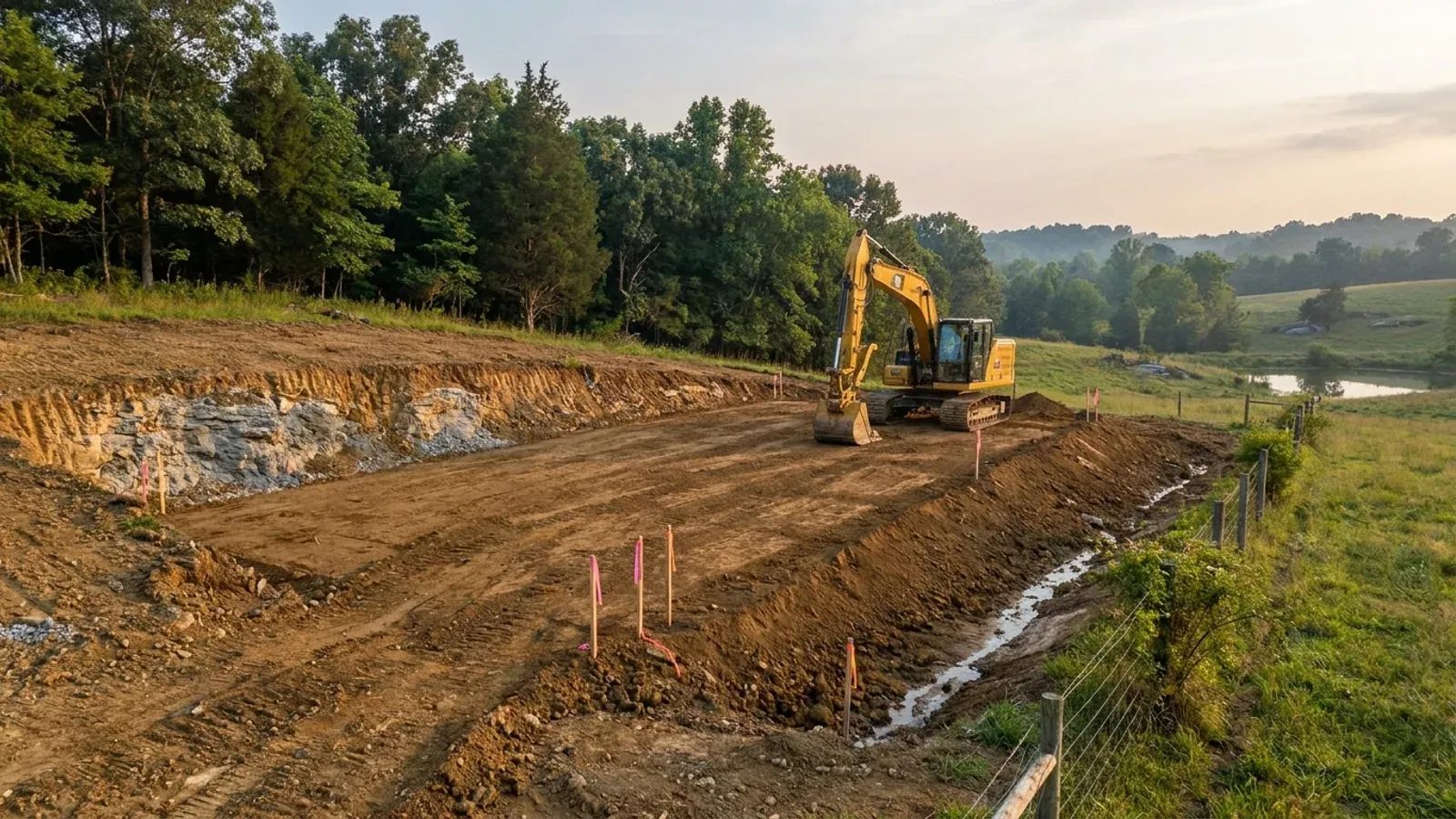
What moves a Kentucky budget is usually below grade, and more often than not it is what the ground is sitting on rather than the ground itself. The Kentucky Geological Survey says 92 of the state's 120 counties contain karst — limestone that dissolves — across four named areas: the Western Pennyroyal around Bowling Green and Hopkinsville, the Inner Bluegrass around Lexington, the Eastern Pennyroyal through Somerset and Monticello, and Pine Mountain in the south-east. On karst, KGS's own model ordinance for local governments lists the structures that should not be sited in sinkhole areas, and the list is buildings with soil-bearing foundations and buildings that cover thousands of square feet with impermeable surface. A post-frame or steel building on a monolithic slab is both of those at once. KGS is equally clear that nearly all karst parcels still have buildable ground on them — so karst does not stop the build, it removes the option of siting the pad by eye. A filled and graded-over sinkhole is the classic trap, because the pad looks perfect.
In the two coal fields the question is undermining instead, and Kentucky treats it differently from everything else: mine subsidence coverage is added automatically to property policies in the counties whose fiscal court voted the fund in, with a written opt-out — thirty-seven of them — while karst collapse gets no fund at all and falls under the ordinary earth-movement exclusion. On slopes the surprise is geographic: KGS's landslide inventory puts Kenton, Campbell, Boone and Gallatin — the northern Kentucky counties opposite Cincinnati — near the very top, above most Appalachian counties, on Ordovician shale. Three of those four — Boone, Campbell and Kenton — are the only counties in the state with a line of their own in the residential code's bearing table, which raises the presumptive value for two named clay groups there and nowhere else. Everywhere else the table gives clay and silt a single presumptive figure, and a soils investigation becomes mandatory once the building official determines the real capacity is likely to be lower than it.
The same ground then sizes the septic system, and Kentucky does that from soil morphology — a certified inspector reading the profile in a backhoe pit — rather than from a percolation test, at 110 gallons a day per bedroom against an application rate taken from soil texture and structure. On a mound or other alternative design a measured permeability test can still be required. And on karst the septic regulation is blunter than the building code ever gets: it declares the ground within seventy feet of an open sinkhole throat unsuitable outright. The soil that needs a foundation engineer is usually the soil that complicates the drainfield, so the site work, the foundation and the septic get resolved together rather than one at a time. We price the dirt before we price the building.
What we build in Garrard County
All seven services are available in Garrard County. What a build costs depends far more on the parcel than on square footage, so we price against your land rather than publishing a rate card.
Barndominium Kits
We check barndominium kit packages against the wind, snow, frost and seismic criteria the Kentucky Residential Code publishes for your county.
Pole Barn Homes
Pole barn homes across Kentucky. KRC §R327 covers accessory barns, not houses — so a pole barn home is engineered by the code's own terms.
Custom Barndominium Plans
Barndominium plans drawn to Kentucky's published county design criteria — snow, wind, seismic, frost — with engineering where the code calls for it.
What a build looks like
Three stages every Garrard County project passes through, from a raw parcel to a finished home. Site work first, because that is where the budget is decided.
The parcel
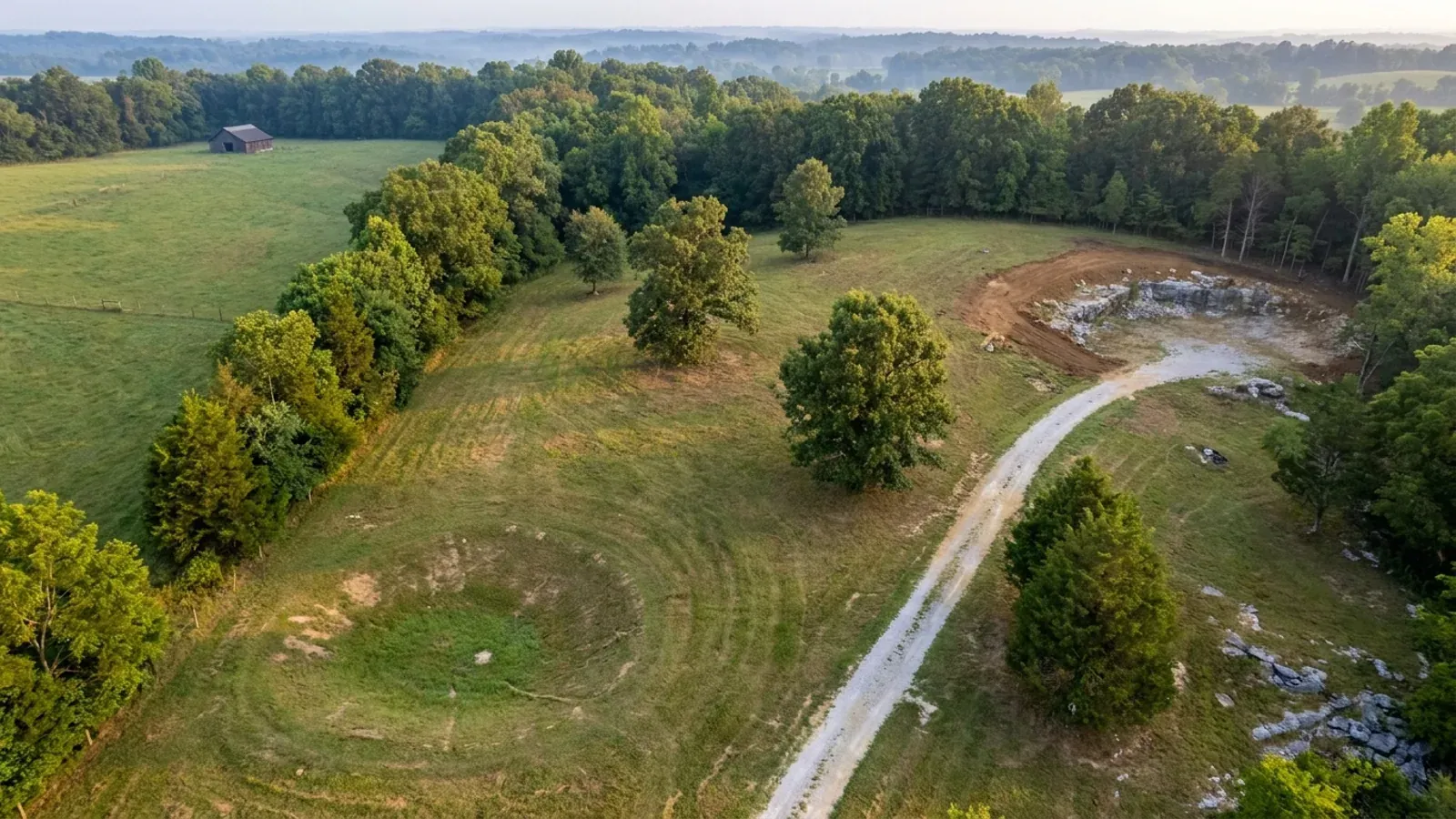
Karst and mine maps, the flood question, zoning where the county has any, and utility access — all checked before anything is drawn.
Pad and permit
Clearing, grading and a compacted pad, while the submittal works through whichever office issues the permit — and where no office does, through the approvals that still apply.
Frame to finish
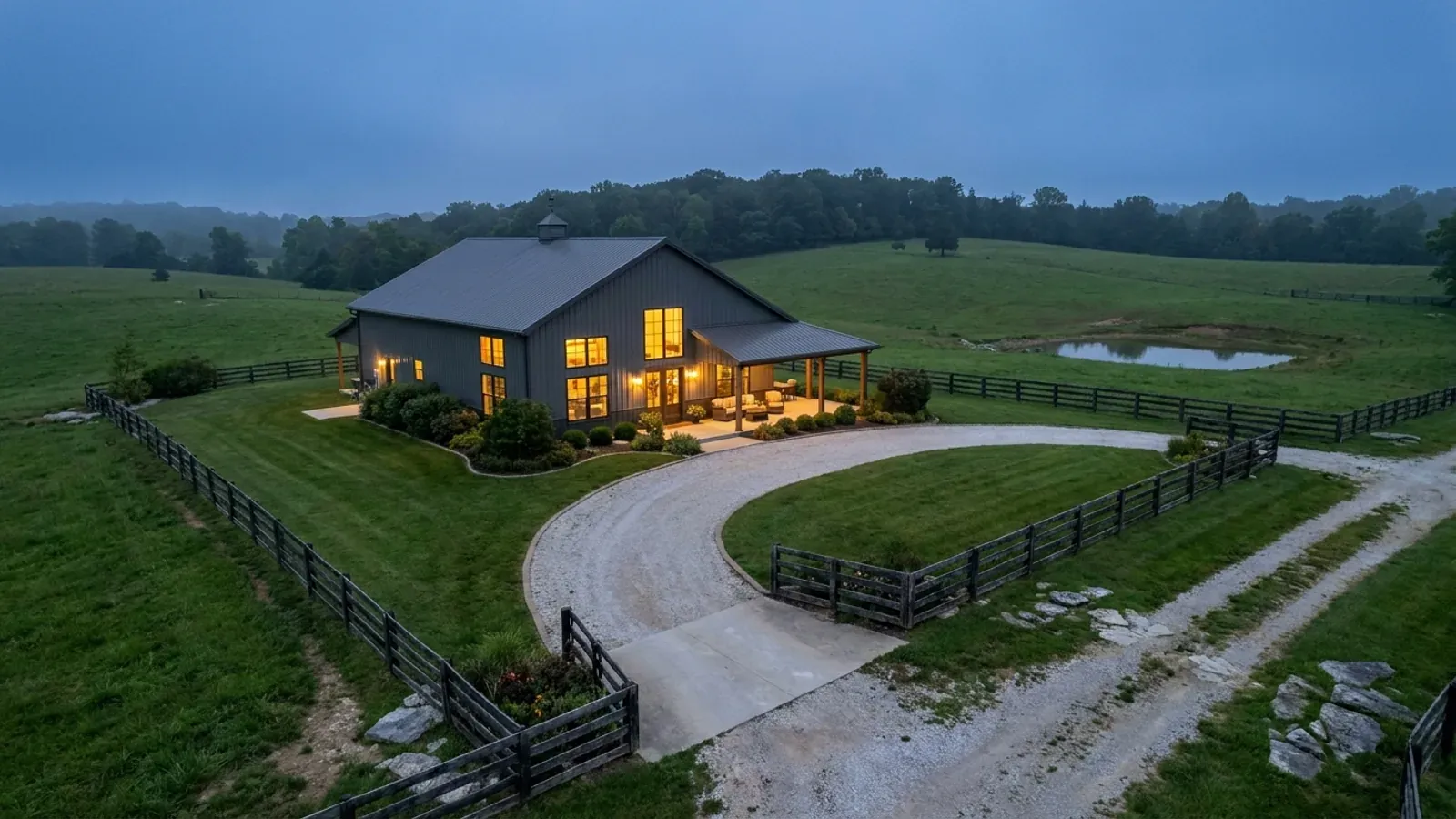
Shell erected and dried in, then systems and interior finish — and the certified electrical inspection your utility needs before it will set a meter.
Those are the rules where you are building in Garrard County. Tell us what you want to build and we will draw it to them.
Where we build around Garrard County
Garrard and the rural land around it. The buildable acreage for a project this size usually sits outside the city limits, and in Kentucky that line frequently decides whether anyone issues a permit at all, not merely who issues it.
Keep reading
The questions that usually come next once you know what Garrard County allows.
Barndominium Cost Guide
Why the published spread runs from one end of the scale to the other, and which of it is the building rather than the ground.
Read itIs It Legal in Kentucky?
Whether your county inspects a house at all, what the farm-dwelling exemption really requires, and the approvals that reach you anyway.
Read itWhat a Pole Barn Home Costs
Post-frame against stick-built, and what the prescriptive post-frame section of the state code does and does not cover.
Read itNearby areas we build in
Others we cover nearby. They share the same statewide code and the same state-published design tables — but whether a house is permitted and inspected at all, whether the county zones, what the health department will accept for septic, and what the ground does to a foundation can all differ from one card to the next. Two counties that touch are not two versions of the same answer.
Building in Garrard County: common questions
9 questions we get asked most often about building in Garrard County. If yours is not on the list, ask it directly.
Do I need a building permit for a barndominium in Garrard County?
Can I build a shop bigger than the house in Garrard County?
How much land do I need to build here, and is there really acreage in Garrard County?
What structural design figures does a Garrard County build have to meet?
Is Garrard County zoned, and who do I ask for a variance?
Can I live in a camper on the land while the barndominium goes up?
What does the septic process cost and when does it happen?
What about flooding, sinkholes and slopes in Garrard County?
Does the farm exemption let me skip the permit?
Building in Garrard County?
Start with the plan. Tell us what you want to build and we will draw it, then confirm whether any office permits and inspects a house where your parcel is, what it will let you put there, and which line of the state's snow, frost and seismic tables your county falls on. That conversation costs nothing.