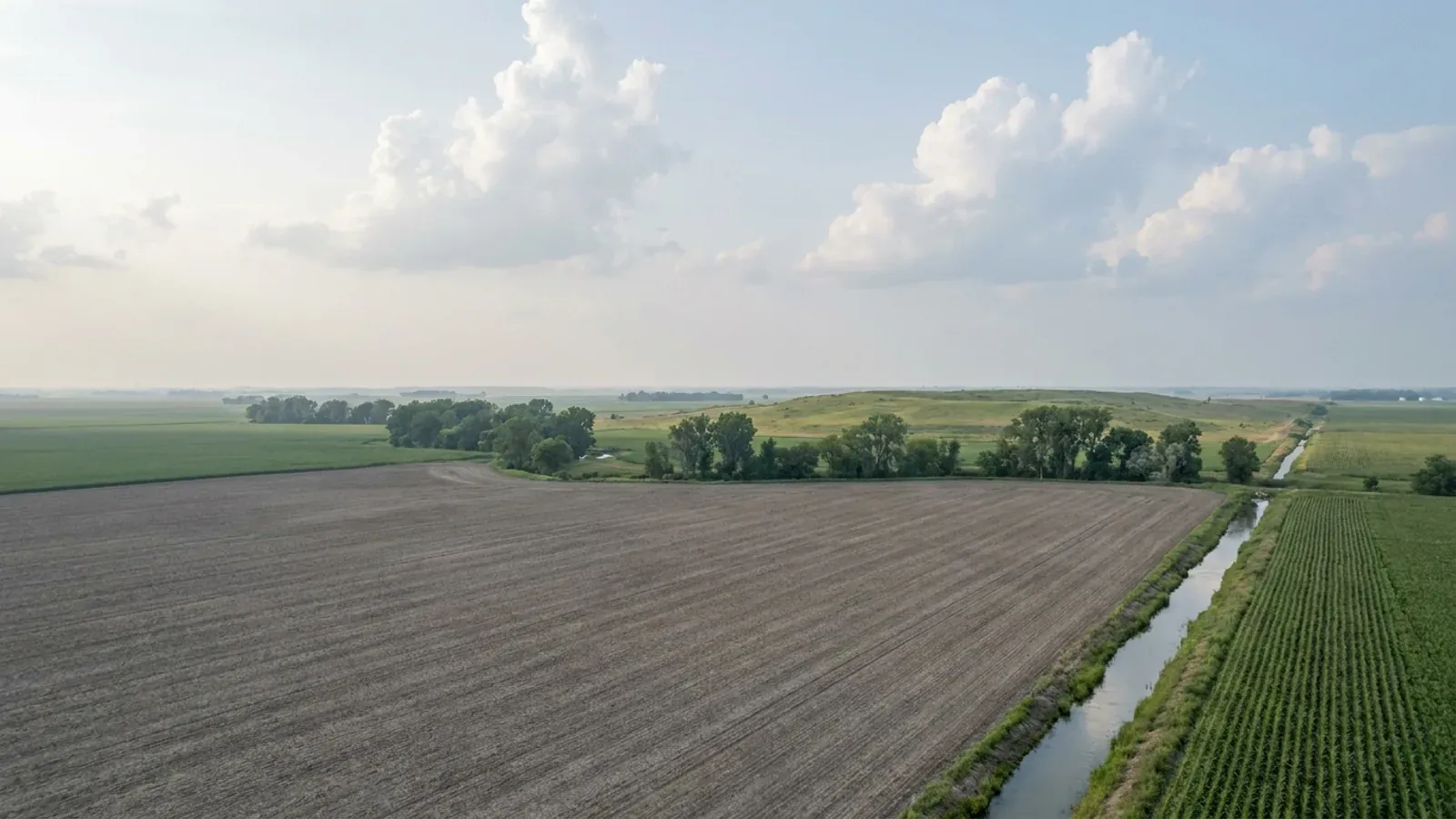
Barndominium Builders in Daviess County, KY
Daviess County is the western end of this company's map, and it is the Kentucky county where the pole barn is not a folksy word for something else — it is what people here actually build and actually search for. Owensboro is Kentucky's fourth-largest city and the seat of its own metropolitan area of Daviess, Hancock and McLean; it is not part of Evansville's, which since the July 2023 federal delineation contains no Kentucky county at all. The permitting answer here is the opposite of what most of this site says about Kentucky. Where many Kentucky counties have no local building inspector for rural land, Daviess runs one program across the whole county: the Owensboro Metropolitan Planning Commission issues building and electrical permits and inspects construction for the City of Owensboro and for Daviess County alike, with the City of Whitesville handling its own building permits through its city clerk. There is a joint zoning ordinance too, and it treats rural land generously — the A-R Rural Agriculture zone sets a one-acre minimum lot, ten-foot side yards, a twenty-foot rear yard and no maximum building height at all beyond airport zoning, and the ordinance's accessory-structure size cap only reaches lots under half an acre. Two things about the ground here matter more than anywhere else on this site. Daviess is one of the thirty-seven counties in the Kentucky Mine Subsidence Insurance Fund, so the coverage rides on a property policy automatically unless the owner waives it in writing. And the Ohio River forms the county's northern boundary, with the Green River on the south-west and Panther Creek through the middle — so this is the page where the state floodplain permit that stacks on top of the local one actually earns its space.
Daviess County at a glance
- County
- Daviess
- Population
- 105,521
- ZIP codes
- 42301, 42302, 42303, 42304, 42334, 42355, 42356, 42366, 42376, 42377, 42378
- Site visits
- Site visits across the Green River country — Daviess, Hancock, McLean and Ohio
Building conditions in Daviess County
The building code is the same in every Kentucky county, and no local government may adopt or enforce a different one on a house — the Kentucky Residential Code says so in its own text. The design criteria are settled by the state too: the code prints a filled-in table covering all 120 counties, so your county's ground snow load, frost depth and seismic design category are published figures rather than something a local office decides. Ultimate design wind speed is 115 mph for every county in the state.
What changes from one county to the next is whether anyone checks. Kentucky makes permits, inspections and certificates of occupancy optional for a single-family home unless the local government has passed an ordinance requiring them, and it forbids the state from stepping in where none has. Twenty-five counties tell the state outright that they have no local building inspector, and in much of the rest the answer depends on an ordinance the county either passed or never did. Zoning is a separate, equally local choice — most Kentucky counties have never adopted any. What is below covers this county specifically: who issues the permit if anyone does, what the state's tables assign it, and what the ground does to a slab.
https://www.iompc.org/services/building_and_electrical.php (OMPC Building and Electrical Division, read 6 Sep 2026) · https://www.iompc.org/about/index.php (jurisdictions served and the Owensboro-Daviess County Building Code Appeals Board) · https://dhbc.ky.gov/Documents/Daviess%20County.pdf (DHBC county sheet updated 21 April 2025; text extracted and read 6 Sep 2026 — it names Matthew Warren as Local Building, Electrical and HVAC Inspector at 200 E. Third St, 270-687-8665, and is a contact directory rather than an ordinance register) · https://apps.legislature.ky.gov/law/statutes/statute.aspx?id=52659
https://iompc.org/Documents/Services/z08.pdf (Owensboro Metropolitan Zoning Ordinance Article 8, Schedule of Zones, §8.5.1; text extracted and read 6 Sep 2026 — also served from the commission's CMS at https://cms2.revize.com/revize/owensborometropolitanplanningcommission/Documents/Services/z08.pdf) · https://cms2.revize.com/revize/owensborometropolitanplanningcommission/Documents/Documents/Zoning%20Ordinance/z03.pdf (Article 3, General Zone and District Regulations, §3-6(a)(2), §3-6(b), §3-6(c), rev. 05/23)
https://iompc.org/Documents/Services/z08.pdf (Article 8 §8.5.1(k) and (l), text extracted and read 6 Sep 2026) · https://cms2.revize.com/revize/owensborometropolitanplanningcommission/Documents/Documents/Zoning%20Ordinance/z03.pdf (Article 3 §3-6(a)(2))
https://insurance.ky.gov/PPC/Documents/JAN%202025_Revised%20Mine%20Subsidence%20Insurance%20Fund%20080124.pdf (KDOI brochure, 37-county list including Daviess) · https://insurance.ky.gov/ppc/Documents/bulletin0904minesubs092109.pdf (Bulletin 2009-04, the fiscal-court participation mechanism) · https://codes.findlaw.com/ky/title-xxv-business-and-financial-institutions/ky-rev-st-sect-304-44-030/ · http://www.minemaps.ky.gov/Maps/InteractiveMaps (accuracy and completeness disclaimer, read directly 6 Sep 2026) · https://eec.ky.gov/Natural-Resources/Mining/Mine-Safety/safety-inspections-and-licensing/Pages/mine-mapping.aspx
https://www.fema.gov/cis/KY.html (Kentucky Community Status Book, read 6 Sep 2026) · https://iompc.org/Documents/Services/z18.pdf (Owensboro Metropolitan Zoning Ordinance Article 18, Floodplain Regulations, §18-3(a), §18-4(c)(1)(e), §18-5(b)(1); text extracted and read 6 Sep 2026) · https://www.daviessky.org/flooding/ (the live county host refuses automated requests, so the CRS discounts and the flood-hazard description were read 6 Sep 2026 from the Internet Archive capture at http://web.archive.org/web/2026/https://www.daviessky.org/flooding/) · https://apps.legislature.ky.gov/law/kar/titles/401/004/060/
https://dhbc.ky.gov/Documents/2018%20Kentucky%20Residential%20Code%203d%20Ed.pdf — Table R301.2(1) (snow, wind, weathering, termite), Table R301.2.2.1 Seismic Design Categories–Site Class D, Table R403.1.4 Minimum Frost Protection Depth for Kentucky; transcribed in research/statewide/design-criteria-and-climate.md
Also worth knowing before you build in Daviess County
- The building permit fee is published and you can work it out before you call
- OMPC prices a building permit off construction cost on a published schedule, form 303, and the arithmetic is simple enough to run on the back of an envelope. Up to and including $3,000 of construction cost the fee is $20. From $3,000 to $100,000 it is $20 plus $3 for each $1,000 above $3,000. From $100,000 to $500,000 it is $311 plus $2 for each $1,000 above $100,000. From $500,000 to $10,000,000 it is $1,111 plus $1 for each $1,000 above $500,000, and above that $10,611 plus 50 cents per $1,000. So a $300,000 barndominium prices at $711 — a figure the schedule's own printed lookup table confirms line by line. Electrical permits are priced separately on form 303e. Two other things sit alongside the permit. Electrical licensing left OMPC for the state in 2003 under House Bill 115, so only a state-licensed electrical contractor may pull an electrical permit, each contractor must employ at least one master electrician, and all electrical work must be done by or under the supervision of a licensed electrician. And a business location has to be approved by planning and zoning before a business licence issues.
- No contractor licence here — one joint occupational form, $75 in the city and a $0 county minimum
- Kentucky issues no state licence for residential general contracting, and Owensboro and Daviess County add none of their own — OMPC's building service describes permitting, plan review and inspection with no contractor registration step, and the joint occupational application has no competency question on it. What both jurisdictions do require is an occupational business licence. Daviess County's own words are that every person and business entity engaged in any business in the county is required to apply for and obtain an occupational license before the commencement of business, and that the Fiscal Court contracts with the City of Owensboro to administer occupational tax compliance under ordinance KOC 220.33 (2020). The mechanism is a single form headed City of Owensboro / Daviess County Fiscal Court Occupational Business License Application, and its minimum annual licence fee box is the interesting part: $75 for the City of Owensboro and $0 for Daviess County. Compare Bowling Green and Warren County, which run a joint contractor licensing board charging $250 for a general and $100 for a specialty licence with $100,000 of general liability behind it, or Somerset at $150 local and $200 non-local. Daviess is a registration county, not a licensing one — and there is still an annual net profit return behind that licence.
- 974 farms averaging 279 acres — this is production ground, not a homesite market
- USDA's 2022 Census of Agriculture makes Daviess the mirror image of the south-central counties on this site. It counts 974 farms across 271,336 acres at an average of 279 acres, against a Pulaski County average of 126 acres. Cropland is 226,806 of those acres — 84 percent of all land in farms — with only 14,294 acres of pasture and 19,145 of woodland, and 12,244 acres under irrigation. Daviess ranks second in Kentucky for total value of agricultural products sold at $335.9 million, and first in the state for grains, oilseeds, dry beans and dry peas at $195.2 million. That shapes the land search in a specific way: the county's acreage is largely working row-crop ground held in large blocks and priced accordingly, and it does not come apart into hobby tracts readily. The size distribution still leaves a real band to work in — 460 farms of 10 to 49 acres and 73 under 10 acres, so 533 of the 974 are under fifty acres — and the A-R zone's one-acre minimum means a homesite does not need to be large. But a buyer chasing forty wooded acres with a creek is better served looking south and east into Ohio, Grayson or Breckinridge counties than holding out for it in the Ohio River bottoms.
- Green River District Health Department writes the septic permit, and its window is ninety minutes a day
- Septic in Daviess County is the Green River District Health Department, which covers seven counties — Daviess, Hancock, Henderson, McLean, Ohio, Union and Webster — with the Daviess County Community Health Center at 1600 Breckenridge Street in Owensboro. Before a new house can go up on ground not served by a municipal sewer, an environmentalist has to perform a site evaluation: a field analysis of soil texture and structure, identification of restrictive horizons, and of any other soil property that would interfere with wastewater disposal or risk groundwater contamination. The application is made in person at the county health center and wants a location map showing how to reach the site, a site drawing with property lines, lot dimensions, existing structures, water features and easements, floor plans where the county requires them, and a $200 fee. Once the site is approved the department issues the permit to a certified installer for construction and inspection. The scheduling detail is the one that catches people out: in most of the district the environmentalists keep office hours from 8:00 a.m. to 9:30 a.m., Monday to Friday. That is a ninety-minute daily window, and a septic evaluation is on the critical path of the whole build.
- Radon Zone 2, no named karst region, and river-bottom ground the bearing table has no line for
- Daviess is EPA radon Zone 2 — moderate potential, a predicted average indoor screening level between 2 and 4 pCi/L — not Zone 1 like the Pennyroyal and Bluegrass karst counties, and not Zone 3 like neighbouring Hancock. EPA's own caveats travel with that: the map was drawn in 1993, it should not be used to decide whether an individual home needs testing, and all homes should be tested regardless of zone. The Kentucky Residential Code adopts appendices K, R and S and not Appendix F, Radon Control Methods, so radon-resistant construction is required nowhere in Kentucky; a passive sub-slab rough-in is a choice, and cheap while the slab is open. Geologically this is coal-measure sandstone and shale with Ohio River alluvium along the north, not the soluble limestone that makes the Pennyroyal sink — the Kentucky Geological Survey names no Daviess community among the cities of its karst regions, though KGS publishes no county roster and the parcel-level answer is its Karst Potential Index viewer. What does deserve attention here is soft ground rather than voids. Table R401.4.1 of the residential code presumes 1,500 psf for clay, sandy clay, silty clay, clayey silt, silt and sandy silt, and its footnote b makes a soils investigation mandatory once the building official determines that in-place soils below 1,500 psf are likely present. River alluvium is exactly the material that raises that question.
- Owensboro is its own metro area — it is not part of Evansville's, and has not been since 2023
- This gets written wrongly a lot, including by people selling buildings here. Owensboro anchors the Owensboro, KY Metropolitan Statistical Area, which is Daviess, Hancock and McLean counties. It is not a suburb of Evansville. Under the July 2023 OMB delineation the Evansville IN-KY metropolitan area no longer contains a Kentucky county at all — Henderson County, which used to be in it, is now its own micropolitan area. Owensboro is Kentucky's fourth-largest city at roughly 60,000 people inside a county of about 105,500 across 462 square miles, a density of 224 per square mile that is high for a Kentucky county but is nothing like an urban one. Practically, that matters for two reasons. It means the county has a real planning department, a real building inspection program and a real floodplain program, which most Kentucky counties of comparable land area do not. And it means the whole county genuinely is served by one permitting counter, so there is no city-line trap of the sort that catches buyers in counties where the city inspects and the county does not.
https://cms2.revize.com/revize/owensborometropolitanplanningcommission/Documents/Documents/Forms/f303.pdf (OMPC Building Permit Fee Schedule, form 303 rev. 05/17; text extracted 6 Sep 2026 and the formula cross-checked against the printed cost/fee lookup table in the same document — linked from the commission's site as https://iompc.org/Documents/Forms/f303.pdf) · https://www.iompc.org/documents/electrical_license_requirements.php · https://edc.owensboro.com/one-stop-permitting/
https://www.daviessky.org/departments/finance/occupational-taxbusiness-license/ (the live county host refuses automated requests; read 6 Sep 2026 from the Internet Archive capture at http://web.archive.org/web/20251103094705/https://www.daviessky.org/departments/finance/occupational-taxbusiness-license/) · https://www.daviessky.org/wp-content/uploads/2017/12/Business-License-Application-Revised-June-2017.pdf (joint application form, text extracted 6 Sep 2026 via the archive copy at http://web.archive.org/web/20251103094705if_/ the same path) · https://www.iompc.org/services/building_and_electrical.php
https://www.nass.usda.gov/Publications/AgCensus/2022/Online_Resources/County_Profiles/Kentucky/cp21059.pdf (2022 Census of Agriculture, Daviess County profile; text extracted and read 6 Sep 2026)
https://healthdepartment.org/onsite-sewage-septic-systems/ (Green River District Health Department, Onsite Sewage and Septic Systems, read 6 Sep 2026) · https://healthdepartment.org/contact-locations/ · https://apps.legislature.ky.gov/law/kar/titles/902/010/085/
https://www.epa.gov/sites/default/files/2014-08/documents/kentucky.pdf (EPA Map of Radon Zones for Kentucky and its printed caveats) · https://www.protectenvironmental.com/wp-content/uploads/2021/04/Kentucky-EPA-Radon-Zone-Map.pdf (rendering of the same EPA map listing Daviess under Zone 2 and Hancock under Zone 3; text extracted 6 Sep 2026) · https://kgs.uky.edu/kygeode/geomap?gkarst=true (KGS Karst Potential Index viewer, parcel-checkable) · https://www.uky.edu/KGS/water/library/gwatlas/wprkarst.html · https://dhbc.ky.gov/Documents/2018%20Kentucky%20Residential%20Code%203d%20Ed.pdf (Table R401.4.1 and footnote b)
https://www.census.gov/programs-surveys/metro-micro/about/delineation-files.html (July 2023 OMB delineation) · research/statewide/geography-and-population.md, which records the Owensboro MSA as Daviess, Hancock and McLean and Daviess at 105,521 across 462 square miles · https://www.iompc.org/about/index.php
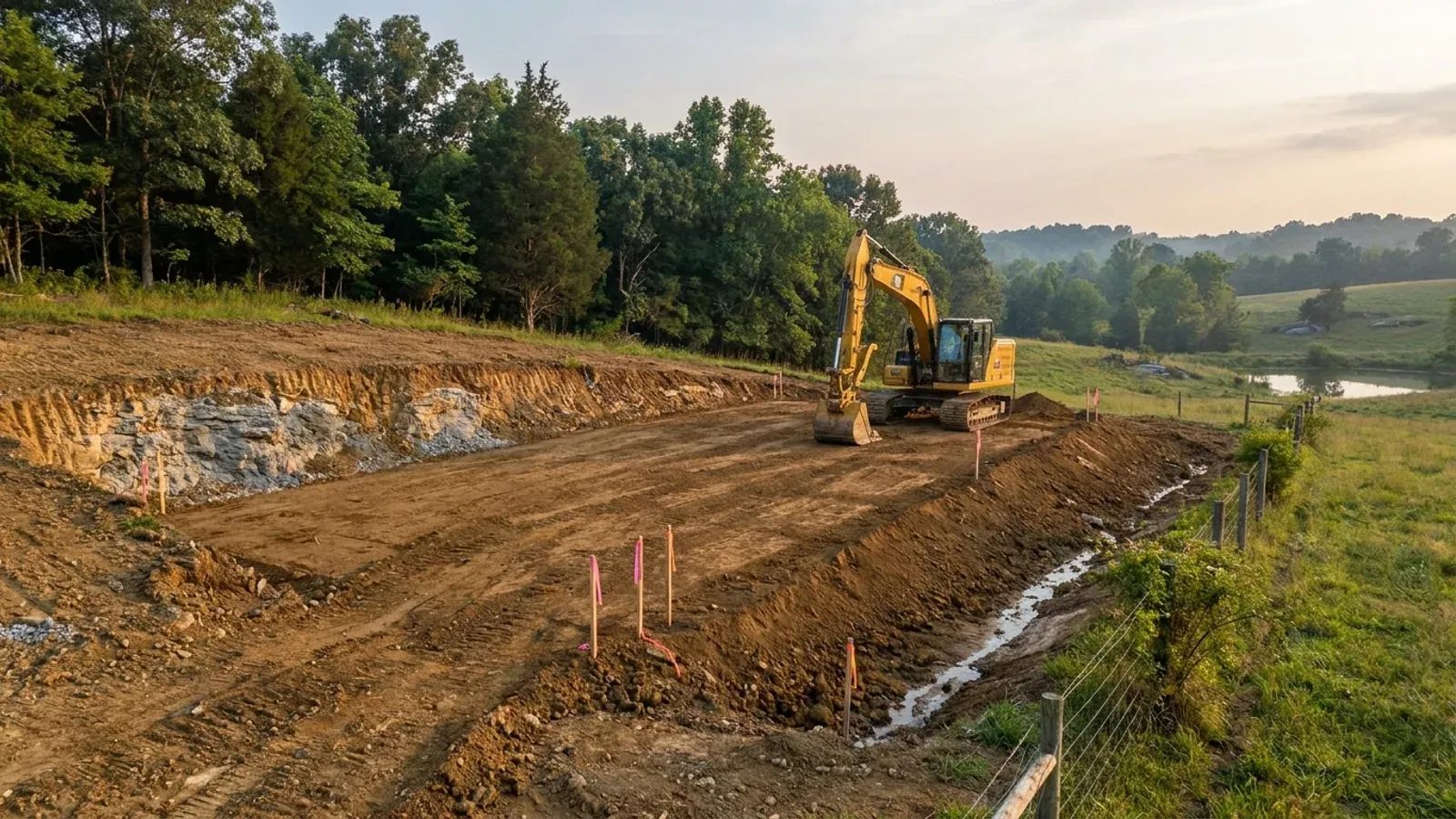
The expensive surprises are in the ground, not the building
What moves a Kentucky budget is usually below grade, and more often than not it is what the ground is sitting on rather than the ground itself. The Kentucky Geological Survey says 92 of the state's 120 counties contain karst — limestone that dissolves — across four named areas: the Western Pennyroyal around Bowling Green and Hopkinsville, the Inner Bluegrass around Lexington, the Eastern Pennyroyal through Somerset and Monticello, and Pine Mountain in the south-east. On karst, KGS's own model ordinance for local governments lists the structures that should not be sited in sinkhole areas, and the list is buildings with soil-bearing foundations and buildings that cover thousands of square feet with impermeable surface. A post-frame or steel building on a monolithic slab is both of those at once. KGS is equally clear that nearly all karst parcels still have buildable ground on them — so karst does not stop the build, it removes the option of siting the pad by eye. A filled and graded-over sinkhole is the classic trap, because the pad looks perfect.
In the two coal fields the question is undermining instead, and Kentucky treats it differently from everything else: mine subsidence coverage is added automatically to property policies in the counties whose fiscal court voted the fund in, with a written opt-out — thirty-seven of them — while karst collapse gets no fund at all and falls under the ordinary earth-movement exclusion. On slopes the surprise is geographic: KGS's landslide inventory puts Kenton, Campbell, Boone and Gallatin — the northern Kentucky counties opposite Cincinnati — near the very top, above most Appalachian counties, on Ordovician shale. Three of those four — Boone, Campbell and Kenton — are the only counties in the state with a line of their own in the residential code's bearing table, which raises the presumptive value for two named clay groups there and nowhere else. Everywhere else the table gives clay and silt a single presumptive figure, and a soils investigation becomes mandatory once the building official determines the real capacity is likely to be lower than it.
The same ground then sizes the septic system, and Kentucky does that from soil morphology — a certified inspector reading the profile in a backhoe pit — rather than from a percolation test, at 110 gallons a day per bedroom against an application rate taken from soil texture and structure. On a mound or other alternative design a measured permeability test can still be required. And on karst the septic regulation is blunter than the building code ever gets: it declares the ground within seventy feet of an open sinkhole throat unsuitable outright. The soil that needs a foundation engineer is usually the soil that complicates the drainfield, so the site work, the foundation and the septic get resolved together rather than one at a time. We price the dirt before we price the building.
What we build in Daviess County
All seven services are available in Daviess County. What a build costs depends far more on the parcel than on square footage, so we price against your land rather than publishing a rate card.
Barndominium Kits
We check barndominium kit packages against the wind, snow, frost and seismic criteria the Kentucky Residential Code publishes for your county.
Pole Barn Homes
Pole barn homes across Kentucky. KRC §R327 covers accessory barns, not houses — so a pole barn home is engineered by the code's own terms.
Custom Barndominium Plans
Barndominium plans drawn to Kentucky's published county design criteria — snow, wind, seismic, frost — with engineering where the code calls for it.
What a build looks like
Three stages every Daviess County project passes through, from a raw parcel to a finished home. Site work first, because that is where the budget is decided.
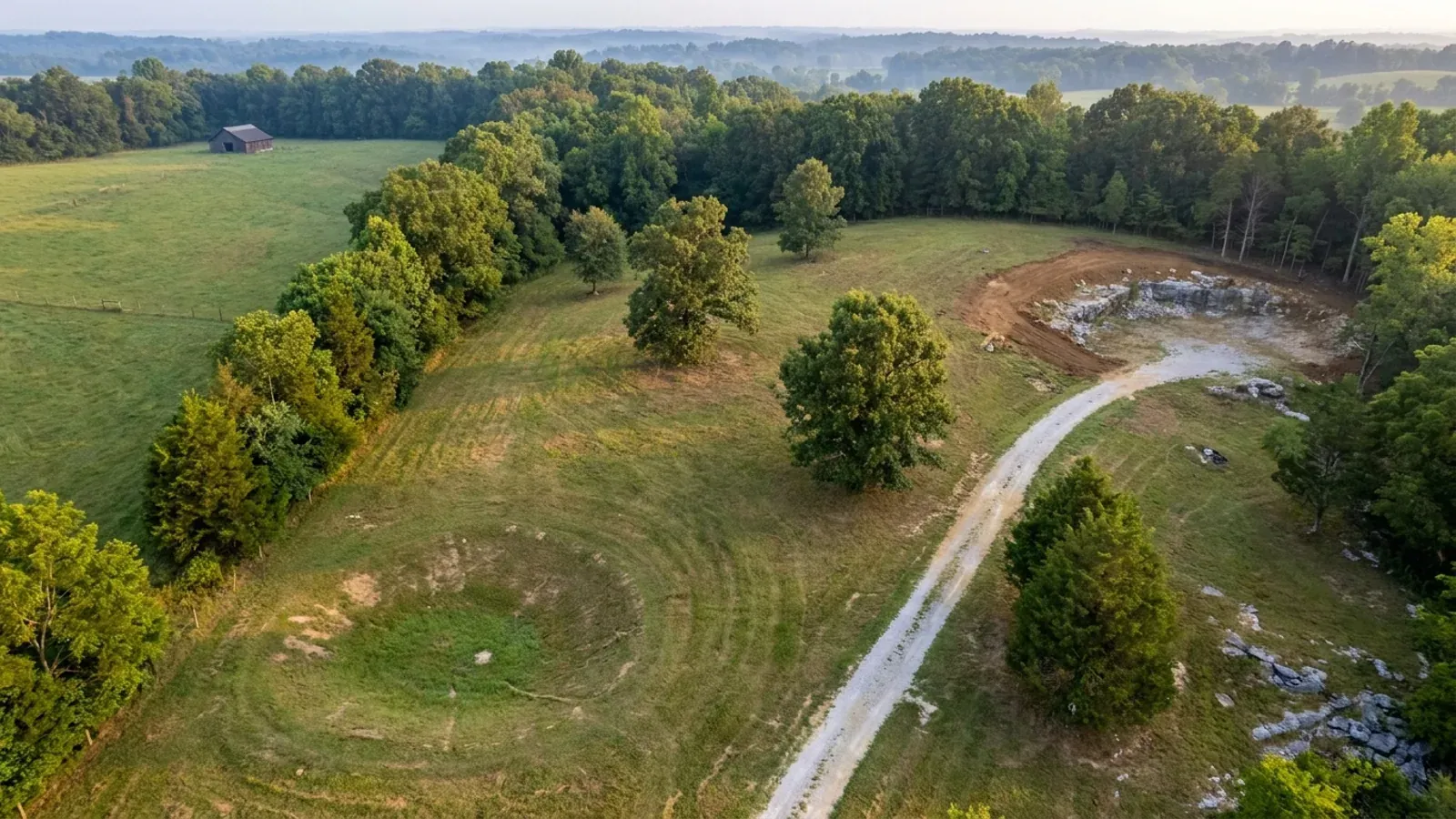
The parcel
Karst and mine maps, the flood question, zoning where the county has any, and utility access — all checked before anything is drawn.
Pad and permit
Clearing, grading and a compacted pad, while the submittal works through whichever office issues the permit — and where no office does, through the approvals that still apply.
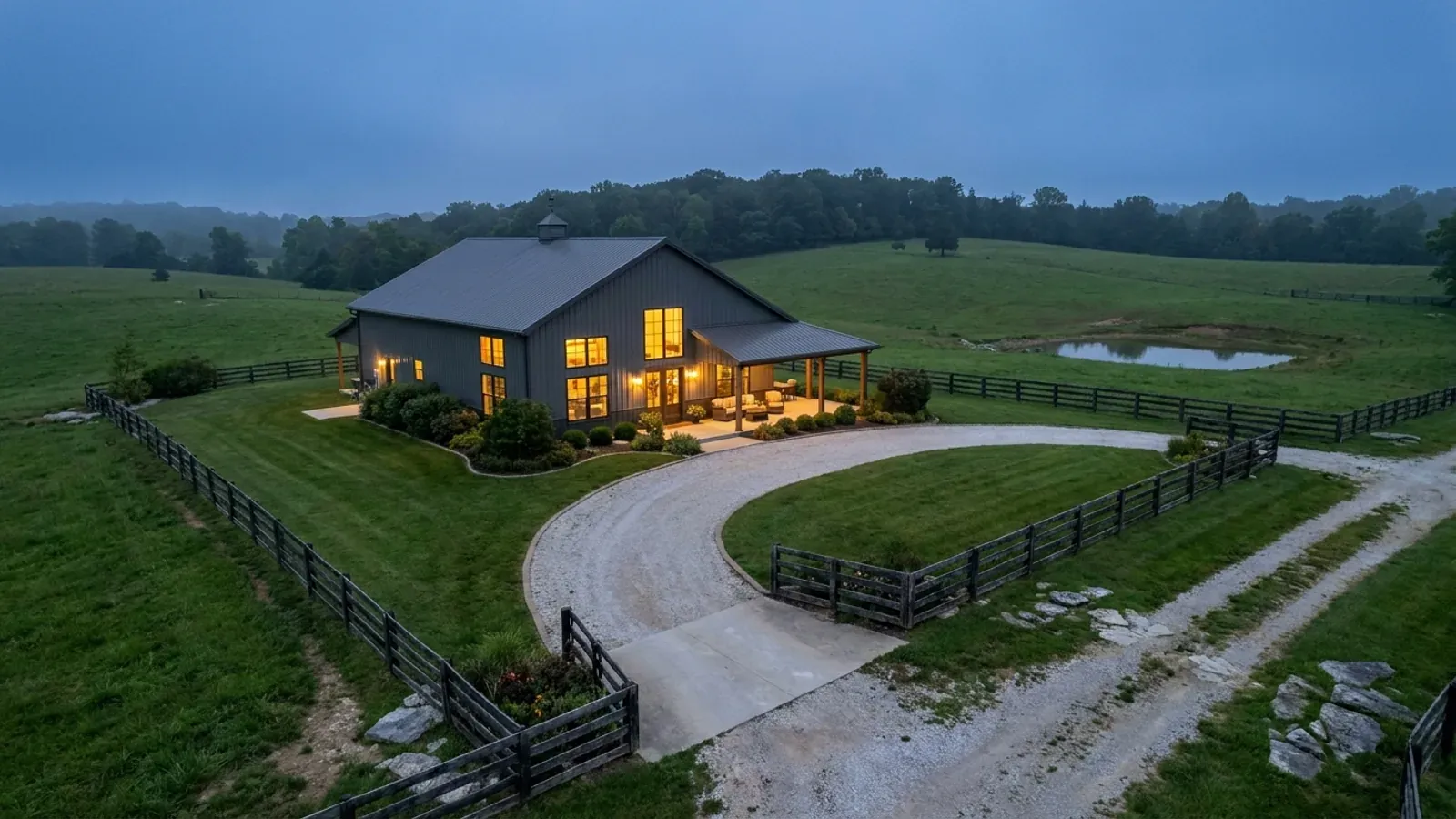
Frame to finish
Shell erected and dried in, then systems and interior finish — and the certified electrical inspection your utility needs before it will set a meter.
Those are the rules where you are building in Daviess County. Tell us what you want to build and we will draw it to them.
Where we build around Daviess County
Daviess and the rural land around it. The buildable acreage for a project this size usually sits outside the city limits, and in Kentucky that line frequently decides whether anyone issues a permit at all, not merely who issues it.
Keep reading
The questions that usually come next once you know what Daviess County allows.
Barndominium Cost Guide
Why the published spread runs from one end of the scale to the other, and which of it is the building rather than the ground.
Read itIs It Legal in Kentucky?
Whether your county inspects a house at all, what the farm-dwelling exemption really requires, and the approvals that reach you anyway.
Read itWhat a Pole Barn Home Costs
Post-frame against stick-built, and what the prescriptive post-frame section of the state code does and does not cover.
Read itNearby areas we build in
Others we cover nearby. They share the same statewide code and the same state-published design tables — but whether a house is permitted and inspected at all, whether the county zones, what the health department will accept for septic, and what the ground does to a foundation can all differ from one card to the next. Two counties that touch are not two versions of the same answer.
Building in Daviess County: common questions
9 questions we get asked most often about building in Daviess County. If yours is not on the list, ask it directly.
Do I need a building permit for a barndominium in rural Daviess County?
What will the permit cost?
Can I build a shop bigger than the house?
Is my land in the floodplain, and what happens if it is?
Is Daviess County undermined, and does mine subsidence insurance apply?
Do I need a contractor's licence to build in Owensboro or Daviess County?
What design figures does a Daviess County build have to meet?
Is there acreage to buy in Daviess County?
Who issues the septic permit here?
Building in Daviess County?
Start with the plan. Tell us what you want to build and we will draw it, then confirm whether any office permits and inspects a house where your parcel is, what it will let you put there, and which line of the state's snow, frost and seismic tables your county falls on. That conversation costs nothing.